


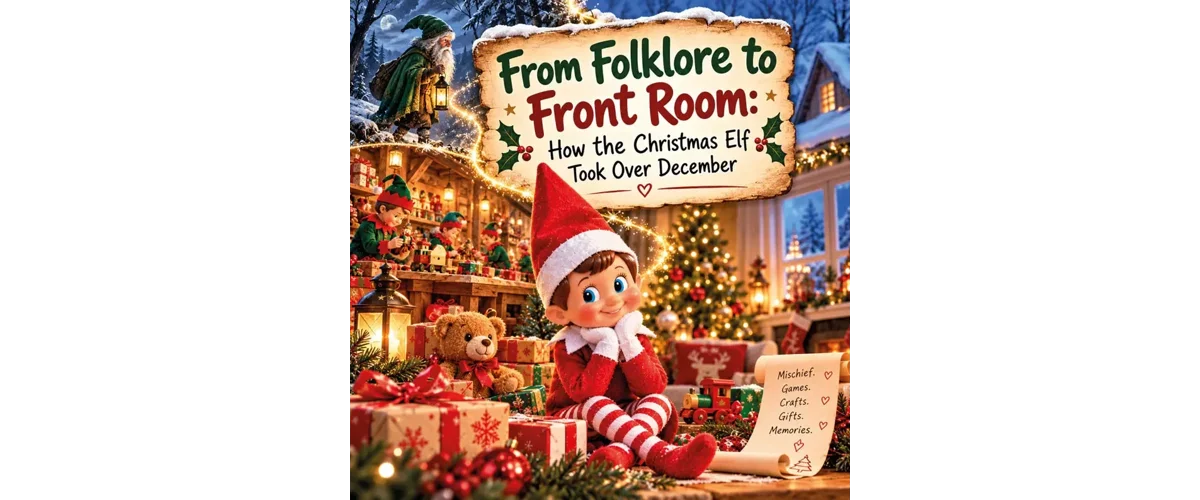
Once upon a time, Christmas elves lived somewhere far away.
They belonged in snowy forests, old stories and, eventually, Santa's workshop. They made toys, looked after reindeer and generally stayed safely at the North Pole.
Then something rather strange happened.
The elf moved in.
Today, for millions of families, the Christmas elf isn't a background character at all. It arrives at the beginning of December, takes over the house, changes clothes, leaves notes, plays tricks, sets challenges, delivers little gifts and occasionally creates a mess that somebody has to clean up before breakfast.
Few Christmas characters have undergone quite the same transformation.
So how did we get from mysterious creatures of European folklore to miniature elf outfits, arrival boxes, practical jokes, craft activities and 24 nights of parents wondering what on earth the elf is going to do next?
The answer is a fascinating mixture of folklore, popular culture, changing family traditions – and our seemingly endless appetite for making Christmas a little more magical.
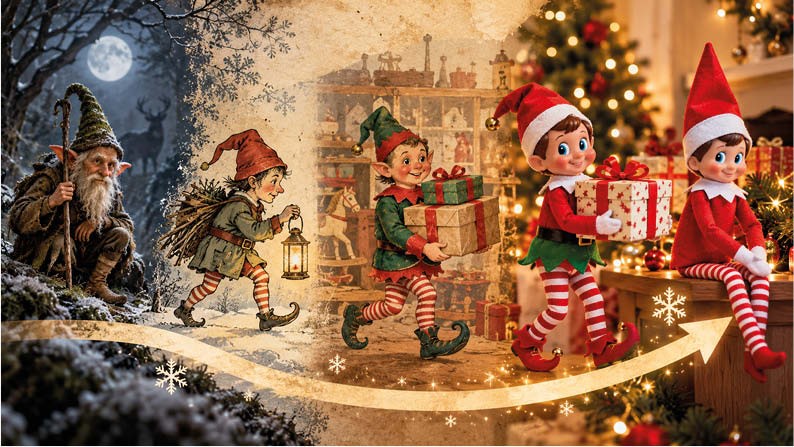
Elves Weren't Originally Christmas Characters
Go far enough back and elves have very little to do with Christmas.
Versions of elf-like beings appear throughout Germanic and Scandinavian folklore. They were supernatural creatures rather than tiny people wearing red and green outfits, and depending on the story they could be helpful, troublesome or something you'd probably prefer not to encounter on a dark winter evening.
The familiar Christmas elf developed much later.
During the 19th century, Christmas itself was changing. Traditions were becoming increasingly centred around the home, children and gift giving, while the modern image of Santa Claus was beginning to take shape.
There was, however, a logistical problem.
If one man was going to provide presents for millions of children, he clearly needed staff.
Enter the Christmas elves.
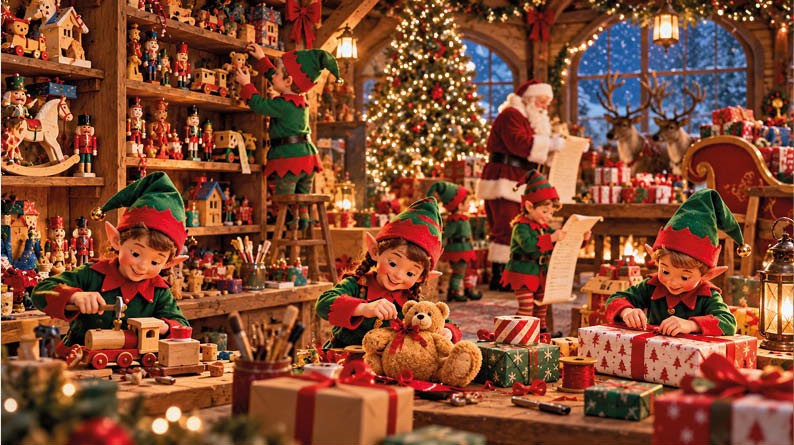
Over time, stories and illustrations increasingly depicted Santa surrounded by small helpers who made toys in his workshop and helped prepare for Christmas Eve.
The elf had found its job.
From Toymaker to Christmas Celebrity
For much of the 20th century, the Christmas elf remained firmly in a supporting role.
Santa was the star.
Elves appeared on Christmas cards, in children's books, decorations, films and shop displays, usually hammering away at wooden toys or wrapping presents in the background.
But popular culture gradually gave elves personalities of their own.
They became cheekier, brighter and more childlike. Instead of simply being Santa's anonymous workforce, elves became recognisable Christmas characters.
And that change was important.
A character can do something a decoration can't: it can become part of a story.
Then the Elf Entered the House
The biggest transformation came when the Christmas elf stopped being something children simply saw in books and films and became something that could apparently visit them.
Suddenly the story was happening at home.
An elf might arrive in a special box or appear unexpectedly one December morning. The following day it could be somewhere completely different.
Perhaps it had climbed the Christmas tree.
Perhaps it was sitting in the biscuit tin.
Perhaps it had borrowed a toy car.
Perhaps it was wearing a new outfit.
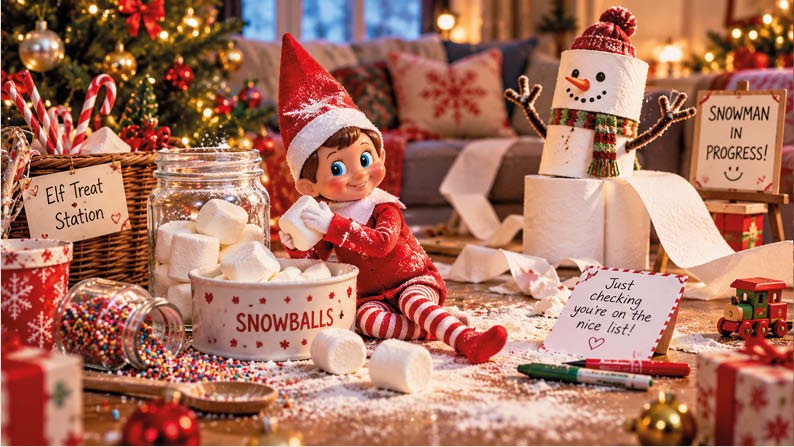
And perhaps – rather suspiciously – it had managed to scatter flour across the kitchen without waking anybody.
This changed the Christmas elf from a character into an activity.
Instead of children hearing one story about an elf, families could create a new chapter every morning throughout December.
That opened the door to an entire world of Christmas elf accessories, props, clothes and jokes, alongside miniature scenes.
A tiny jumper isn't simply a tiny jumper when an elf is wearing it.
It's evidence that something happened while everyone was asleep.
Why Children Love the Mischief
There's actually a very simple idea sitting underneath all those elaborate elf scenes.
Children like surprises.
December is already filled with anticipation. Decorations appear. Christmas cards arrive. Advent calendars count down the days. Presents mysteriously accumulate under the tree.
The Christmas elf adds another small piece of unpredictability.
Where will it be tomorrow?
What has it done?
Has it brought something?
That anticipation can be created with something incredibly simple.
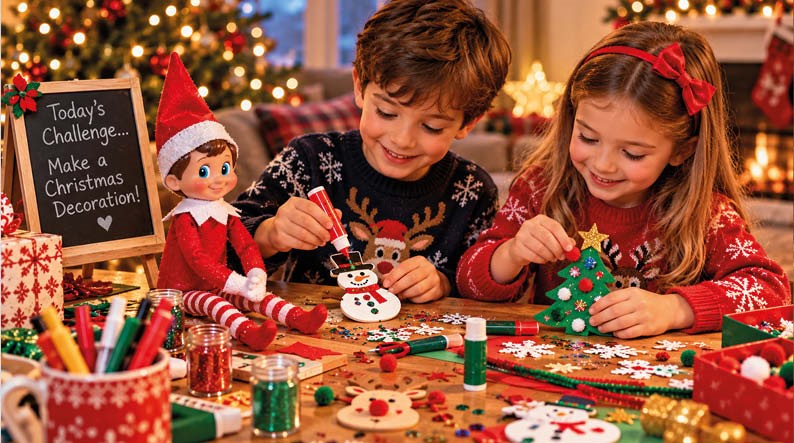
One morning the elf might leave a joke. Another day it might appear with a colouring activity. On another it could challenge the children to make a Christmas decoration.
This is why the modern elf tradition has expanded far beyond the elf itself.
The Rise of the Miniature Elf World
Once you introduce a tiny person into your house, you discover that normal-sized objects are terribly inconvenient.
And so an entire miniature Christmas world has developed around the elf.
There are elf outfits and accessories.
Tiny signs.
Miniature props.
Arrival boxes.
Letters and notes.
Practical jokes.
Games.
Gift bags.
Decorations.
The appeal is partly the same as a doll's house. Everyday objects become funny simply because they're ridiculously small.
Put a normal jumper beside a Christmas tree and nobody notices.
Put a jumper small enough for an elf beside it and suddenly there's a story.
For retailers, this also explains why Christmas elf accessories work differently from many traditional seasonal products. Customers aren't necessarily buying one item. They're building a collection of possibilities that can be reused throughout December.
The Elf Became an Entertainer
Eventually, simply finding the elf in unusual places wasn't enough.
The elf needed things to do.
That helped introduce another branch of the tradition: Christmas elf games and activities.
Puzzles, activity books, colouring, craft sets and games can all become part of the story.
Instead of simply leaving a product for a child, the elf can "deliver" it.
A colouring book becomes today's challenge.
A Christmas craft becomes something the elf wants help making.
A game becomes the evening's family activity.
It's a clever bit of Christmas storytelling because an ordinary activity suddenly feels connected to the larger December adventure.
Why Crafts Fit the Tradition So Well
There's another reason crafts and elves make surprisingly good companions.
Christmas has always been a festival of making things.
Paper chains, homemade cards, painted decorations, biscuits, tree ornaments and school Christmas crafts existed long before today's visiting elves.
The modern elf simply gives those older traditions a new narrator.
Instead of saying:
"We're making decorations today."
the story becomes:
"The elf has left us something to make."
It's a tiny change, but to a young child it can make the activity feel completely different.
It also explains why elf-themed Christmas crafts, colouring activities and creative sets have become part of the wider market rather than remaining separate from elf toys and accessories.
The elf provides the story; the activity provides something to actually do.
Then Came the Presents
Naturally, a creature employed in Santa's toy workshop was never going to stay away from presents forever.
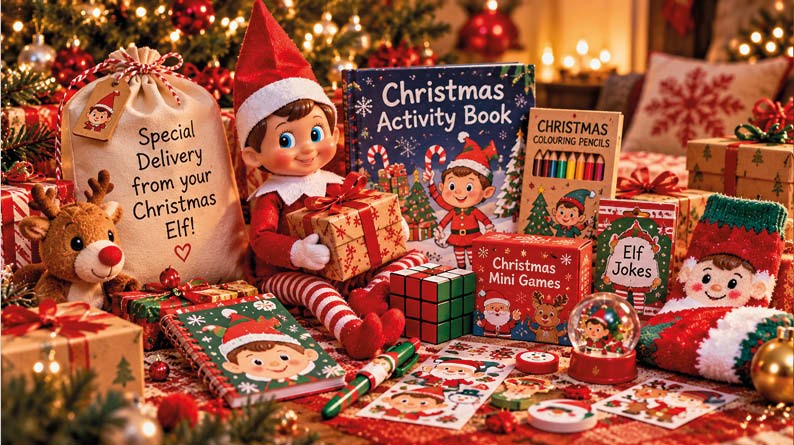
Small elf gifts and surprises have become another part of the tradition.
They don't need to be large.
In fact, smaller items often make more sense.
An elf might arrive with a little puzzle, novelty toy, book, piece of stationery or craft activity. These are essentially the same sorts of inexpensive children's gifts that work as stocking fillers and Christmas Eve box fillers – but presented earlier in December as part of the elf story.
This is one reason the boundaries between Christmas elf gifts, stocking fillers, Christmas toys and festive novelties have become increasingly blurred.
The same small gift can have several different jobs depending on how it's presented.
The Christmas Elf Escapes the House
The elf hasn't remained confined to family homes either.
Schools have embraced elf activities.
PTAs use elf-themed products at Christmas fairs.
Shops create elf displays.
Christmas attractions incorporate elves into grottos.
Children dress as elves for festive events and Christmas jumper days.
Elves appear on games, books, stationery, crafts, decorations, clothing and gifts.
In some ways we've come full circle.
The folklore elf began as part of a much bigger imaginary world. The modern Christmas elf has created another one – except this time children can physically interact with it.
They can dress the elf.
Play its games.
Read its stories.
Make its crafts.
Follow its clues.
Receive its gifts.
And, occasionally, discover that it has wrapped the toilet in Christmas paper.
Why Has the Tradition Become So Big?
Perhaps the most interesting thing about the Christmas elf phenomenon is that the elf itself isn't really the attraction.
The attraction is participation.
A Christmas tree looks beautiful, but children don't wake up every morning wondering where it has moved.
A decoration doesn't leave them a message.
A Christmas card doesn't challenge them to make something.
The elf turns Christmas from something children are waiting for into something that appears to be happening around them.
And because the story isn't fixed, every family can do it differently.
Some elves are spectacularly mischievous.
Some bring activities.
Some leave clues.
Some deliver occasional little gifts.
Some simply move from one shelf to another because Mum or Dad remembered at 11:47pm that the elf hadn't moved yet.
All of them work.
From One Elf to an Entire Christmas Tradition
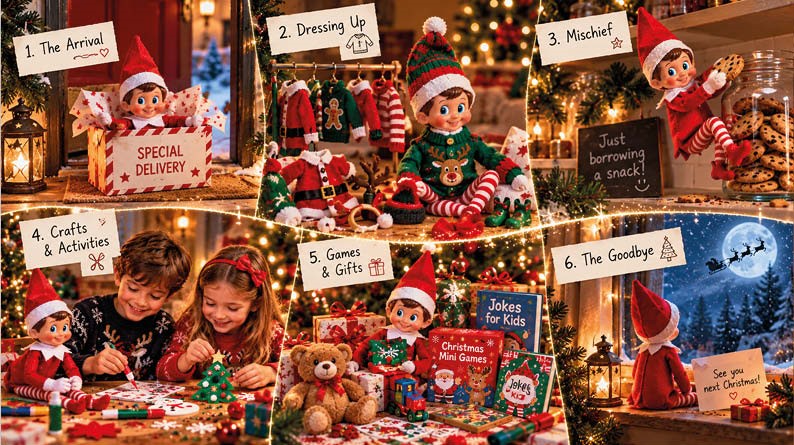
It's quite a journey.
From mysterious creatures in European folklore…
to Santa's toy-making workforce…
to characters in Christmas books and films…
to tiny December houseguests with a suspicious talent for causing trouble.
The Christmas elf has become one of the most adaptable characters of the festive season precisely because there aren't many rules.
It can be a toy, a storyteller, a prankster, a gift giver, an activity leader or simply a little piece of Christmas magic sitting on a shelf.
And around that simple idea has grown a wonderfully strange collection of Christmas elf toys, outfits, accessories, games, crafts, books, props, gifts and novelties.
At Risus Wholesale, our Wholesale Christmas Elf Toys, Gifts & Accessories collection brings those different parts of the tradition together, with products for retailers, schools, PTAs, Christmas events and anyone stocking up for the festive season.
Because apparently helping Santa make toys wasn't enough.
The elves wanted December too.


